Date: October 7th, 3:00 PM – 4:00 PM ET/2:00 PM – 3:00 PM CT/1:00 PM – 2:00 PM MT/12:00 PM – 1:00 PT
Section on Clinical Legal Education
This session brings together clinical faculty members from a range of practice areas to share concrete strategies for teaching students to engage meaningfully with the non-legal dimensions of their clients’ lives, and to examine the ethical questions that guide that engagement.
Presenters will draw on experience across a range of clinic contexts, including an appellate defense clinic serving incarcerated clients, a clinic integrating holistic lawyering principles with explicit attention to professional responsibility, a clinic representing families and children with specialized needs, and a practice addressing the interconnected needs of clients facing housing insecurity and school absenteeism, among others. Together, they will offer a grounded picture of what extra-legal advocacy looks like in practice and how it can be structured as a genuine pedagogical experience.
At least half of the session will be reserved for discussion, so all are welcome to come with ideas on how you already – or how you are considering – teaching “non-legal” issues to clinic students.

Rachel T. Goldberg, Clinical Professor of Law, Cornell Law School
Rachel T. Goldberg, Clinical Professor of Law, founded and directs the Appellate Criminal Defense Clinic and teaches Lawyering. Before joining Cornell Law School, Professor Goldberg practiced appellate-level criminal defense at the Center for Appellate Litigation in New York City. She primarily represented indigent clients on their direct felony appeals and post-conviction proceedings in both the New York Appellate Division and New York Court of Appeals.
Professor Goldberg received her J.D. from New York University, where she was an Editor-in-Chief of the N.Y.U Review of Law and Social Change. She received her Ph.D. in English Language and Rhetoric from the University of Washington, where she received numerous teaching awards and co-directed the Expository Writing Program.
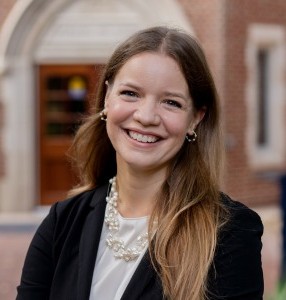
Cassie Powell, Assistant Professor of Law, Legal Practice & Director, Access to Justice Clinic, University of Richmond School of Law
Cassie Powell is the inaugural Director of the Access to Justice Clinic at the University of Richmond School of Law. The Clinic advances the rights of Virginians experiencing poverty through civil litigation services in housing, public benefits, family, and education law matters. Prior to directing the Clinic, Professor Powell was the Managing Attorney of Virginia Legal Aid Society’s Suffolk office. As Managing Attorney, she led a team of attorneys, paralegals, outreach and administrative staff serving families and individuals with limited incomes in a broad range of civil legal areas, including housing, public benefits, domestic violence, family and education law.
Professor Powell previously worked as an attorney with the Legal Aid Justice Center’s Youth Justice Program, focusing on education and civil rights law. She earned her dual law and Master of Social Work degrees from the University of Richmond School of Law and Virginia Commonwealth University. Upon graduation from law school, she received the Professor Nina R. Kestin Service Award. Professor Powell earned her undergraduate degree in English from the College of William and Mary, where she received the President’s Award for Service to the Community.
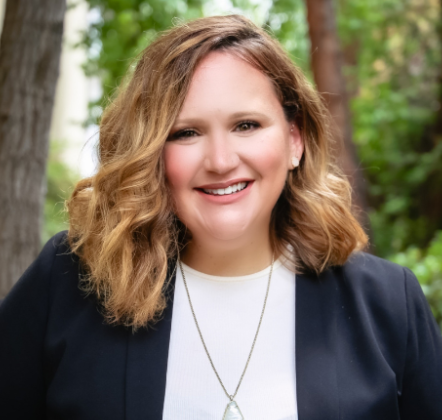
Jenny Rodriguez-Fee, Professor of Law, Director, Children’s Rights Clinic, Southwestern Law School
As a professor and Director of the Children’s Rights Clinic, Jenny Rodriguez-Fee combines her passion for a specialized area of law with her commitment to training Southwestern’s future lawyers. In the clinic, Professor Rodriguez-Fee represents clients in the areas of special education law, school discipline and disability benefits appeals; trains and supervises law students; and develops innovative course curricula. Professor Rodriguez-Fee also utilizes clinic-based pedagogy in her traditional courses as well. Her Legal Profession course is specifically designed with a problem-based curriculum – challenging students to not just learn the rules that govern lawyers’ ethical responsibilities, but also experience those rules coming to life through hypotheticals and simulations.
“It is only through actual practice that students start to clearly understand, not only the language of a rule or regulation, but the limitations of the rule and how to mold and adapt that rule to represent their clients’ best interests. Even more exciting for me though, is that when students start to practice, they develop a confidence in their own skill and ability that makes them more open to that transition from law student to lawyer.”
Prior to teaching, Professor Rodriguez-Fee practiced special education and disability rights law. A graduate of Southwestern, Professor Rodriguez-Fee participated in the Moot Court Honors Program, both as an oral advocate and on the board, was president of the Women’s Law Association, on the board of the Public Interest Law Committee and was part of the inaugural clinic group working under her mentor, Vice Dean Julie Waterstone, in the Children’s Rights Clinic.
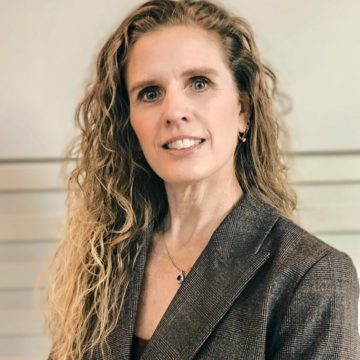
Christina Scott, Assistant Clinical Professor; Co-Director, Health Law Partnership (HeLP) Legal Services Clinic, Georgia State University College of Law
Christina Scott (J.D. ’18) serves as an assistant clinical professor and as the co-director of the Health Law Partnership Legal Services Clinic (HeLP). Before her transition into this position, she was the clinic’s supervising attorney. Before working with students and clients in the HeLP clinic, she served as a legal aid staff attorney for HeLP addressing the health-harming legal needs of patients at Children’s Healthcare of Atlanta and their families. Her office was located in the Center for Advanced Pediatrics, the first-ever outpatient setting for the partnership.
In the clinic, Scott focuses on teaching both the substantive law her students must understand to serve the needs of the low-income patient population and the larger issues concerning the social determinants of health that affect the lives of clinic clients. Beyond her classroom and supervision work, Scott presents to audiences in healthcare settings locally and nationally on topics about health-harming legal needs and social determinants. With a specific interest in special education and children’s disability law, Scott focuses on training families and other legal professionals as advocates in these fields.
Scott graduated magna cum laude from Georgia State University College of Law, where she was also a clinic student for two semesters. She received an M.A. and Ph.D. in English Literature from Northern Illinois University, from where she graduated with distinction. She earned her B.A. in English from Rockford College in Illinois.
