Date: Friday, September 18, 1:00 PM – 2:15 PM ET/12:00 PM – 1:15 PM CT/11:00 AM – 12:15 PM MT/10:00 AM – 11:15 AM PT
Section on Clinical Legal Education
As we all know, generative AI has moved from novelty to daily practice, and litigation clinics sit squarely at the intersection of the questions that follow. How can we and our students use AI to help our clients and what do we need to know? What may we ethically use? What must we tell our clients? What do our students need to learn before they graduate into a profession already using these tools?
This session takes up the professional responsibility concerns particular to litigators — competence, confidentiality, candor to the tribunal, and the supervisory obligations that attach when student attorneys use AI on live cases. It considers the duties owed to clients: how to advise them about AI, what informed consent looks like, when a warning is warranted, and how these tools shape discovery. It addresses the evidentiary problems now arriving in courtrooms, from deepfakes to the authentication of AI-assisted demonstratives. It examines AI’s promise for case theory development, persuasive storytelling, and multisensory presentation, alongside the question of what happens to teaching and learning when the work can be automated.
Throughout, the emphasis will be practical. Participants will leave with concrete tools for student litigator and faculty use, and instructional and policy language that can be adapted for supervision and classroom use.
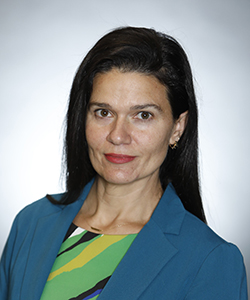
Jaclyn Lopez, Associate Professor of Law and Director of the Jacobs Public Interest Law Clinic for Democracy and the Environment, Stetson University College of Law
Professor Jaclyn Lopez established and directs the Jacobs Public Interest Law Clinic for Democracy and the Environment at Stetson’s College of Law. She also teaches courses in civil procedure, advanced legal research and writing, environmental practice, topics in biodiversity, and an environmental cases camping trip course titled Cases and Places. She comes to Stetson Law from the Center for Biological Diversity, where she served as the environmental nonprofit’s Florida Director and senior attorney for over a decade. She holds a master of laws in environmental and land-use law from the University of Florida, a JD from the University of Denver Sturm College of Law, and a master’s degree in urban planning from the University of Arizona. She writes and lectures on access to courts and decision makers, corporate interference in democracy, climate change, water and air quality, environmental injustice, and the extinction crisis.
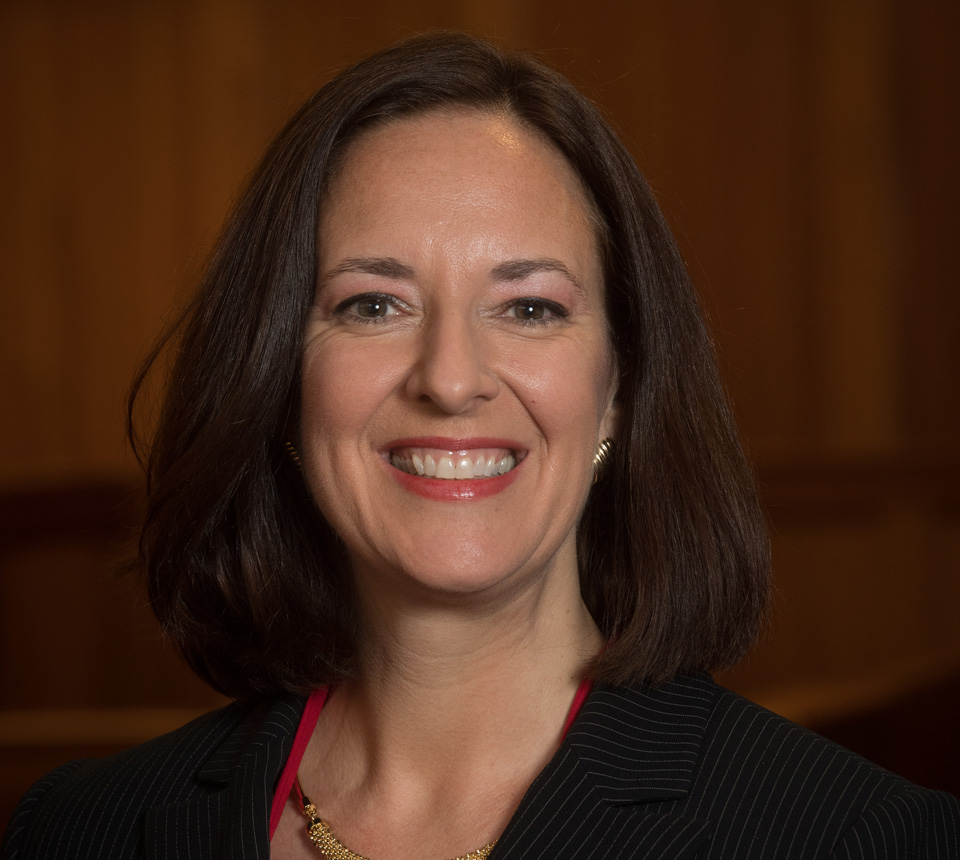
Christina Miller, Associate Clinical Professor of Law and Associate Director of Clinical Programs, Suffolk University Law School
Christina Miller is an Associate Clinical Professor of Law and serves as the Associate Director of Clinical Programs, overseeing Suffolk’s nationally ranked Clinical Programs. As a Professor, she leads the Prosecutors Program and teaches in the areas of digital evidence and criminal procedure. She teaches and supervises the next generation of prosecutors who are practicing pursuant to Supreme Judicial Court Rule 3:03 for District Attorney’s Offices around the Commonwealth of Massachusetts. Her teaching and supervision focus on the foundations of criminal law, case assessment, ethical exercise of state power, the options and impact of criminal law procedure, and informed and thoughtful use of discretion. She works intensively with students to develop skills in the areas of case assessment, oral advocacy, litigation strategy, organization, building professional voice, and confidence.
Prior to joining Suffolk’s faculty, Associate Director Miller served the people of Suffolk County in Massachusetts as the Chief of District Courts and Community Prosecutions and as an Assistant District Attorney. As Chief, she oversaw operations in the Boston municipal and district courts, managed training and hiring of assistant district attorneys, and supervised and handled hate-crime prosecutions. She also investigated and prosecuted incidents of online and in-person child exploitation, domestic violence, and a variety of other cases. Before this position, she was an assistant district attorney representing the Commonwealth in the trial and appellate courts, for the Suffolk, Norfolk, and Essex County district attorneys. She began her legal career as a law clerk for the Massachusetts Superior Court.
Associate Director Miller also serves the Massachusetts Bar through leadership on numerous committees and task forces focusing on criminal litigation, diversity and inclusion, equality in the legal profession, and community centered justice. Currently, she Co-Chairs the Boston Community Justice Task Force, which works to support justice involved individuals who live with addiction and mental health challenges and collaborates with justice partners in the area of criminal sentencing alternatives and diversion. She seeks to guide justice-led legal and policy efforts through her work as Co-Chair of the Boston Bar Association’s Amicus Committee and Board of Editors for the Boston Bar Journal, and as a member of the Internal Affairs Oversight Panel for the City of Boston’s Office of Police Accountability and Transparency.
Associate Director Miller presents and trains in the areas of digital evidence, criminal procedure, ethical prosecutorial practice, integrating digital technology into teaching of criminal law and procedure, and Massachusetts, criminal motion and trial practice.

Alexandria Serra, Associate Professor, University of San Francisco School of Law
Alexandria Serra is an Associate Professor at the University of San Francisco School of Law, where she teaches Criminal Law and Criminal Procedure. She spent nearly a decade as a criminal defense attorney and public defender in El Paso, Texas, before serving as a Visiting Assistant Professor at UMKC School of Law. Her scholarship sits at the intersection of artificial intelligence, constitutional criminal procedure, and the rights of the accused, examining how AI technologies are reshaping the modern criminal trial.
Serra is also a builder. She has developed more than twenty custom AI tools for legal education and advocacy training, and she regularly trains judges, public defenders, and practicing attorneys on the responsible use of AI in legal practice. Her work increasingly focuses on AI policy development in partnership with judiciary stakeholders navigating these tools’ adoption in courts.
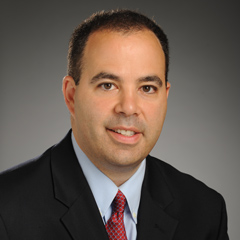
Paul Radvany, Clinical Professor of Law, Fordham University School of Law
Professor Paul Radvany is a Clinical Professor at Fordham Law School where he directs the Securities Arbitration Clinic and also teaches a Leadership for Lawyers class. He has also taught a Criminal Justice seminar and Trial Practice. He is a past Chair of the American Association of Law Schools’ Litigation Section. Professor Radvany is on the pro bono panel of mediators for the Second Circuit Court of Appeals. Professor Radvany is a co-author of “Trial Practice,” South Carolina Press (2014). Before joining Fordham’s faculty in 2007, Professor Radvany was a Deputy Chief of the Criminal Division for the United States Attorney’s Office in the Southern District of New York, where he oversaw the Securities and Commodities Fraud, Major Crimes, and General Crimes Units and directed the trial training program for new AUSAs. He clerked for the Hon. Michael H. Dolinger in the Southern District of New York, and he received his J.D. from Columbia Law School, where he was a Harlan Fiske Stone Scholar, and his B.A. from Columbia College.
