Sponsored by the AALS Sections on: Associate Deans for Academic Affairs and Research, Critical Theories, Leadership, New Law Professors, Pro Bono & Access to Justice, Professional Responsibility, and Women in Legal Education
The Preamble to the Model Rules of Professional Conduct defines a lawyer as having three roles: 1. A representative of clients; 2. An officer of the justice system; and 3. A public citizen with the special responsibility for the quality of justice. In addition, the Preamble emphasizes the importance of a self-governing profession to the rule of law and provides, “[a]n independent legal profession is an important force in preserving government under law, for abuse of legal authority is more readily challenged by a profession whose members are not dependent on government for the right to practice.” While all lawyers have had the obligation to uphold the rule of law and safeguard democracy, the role of public citizen has often been largely invisible or, at a minimum, relegated to pro bono or public interest work. In this current moment, when the foundation of our democracy is being challenged and the rule of law questioned, how can the role of public citizen be used to teach law students about what it means to be a lawyer? How does this definition of lawyer as public citizen inform how we teach our students about the lawyer’s role in democracy, the rule of law, and as the safeguards of justice?
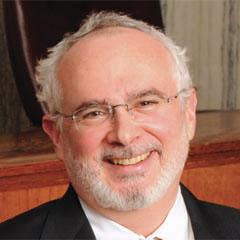
Sameer Ashar, Clinical Professor of Law and Director of Workers, University of California Irvine School of Law
Sameer Ashar has worked with students to defend immigrants in deportation proceedings and low-wage workers in litigation against exploitative employers in clinics at five law schools. He has also worked with students on numerous policy advocacy and community education projects in collaboration with immigrant and labor organizations in California, New York, and Maryland. Ashar writes about law, lawyering, and social movements across multiple subject areas, including labor law, immigration law, and the legal profession. The focus of his scholarship is on how law and lawyering both inhibits and enables collective action against racial and economic subordination. Ashar has published most recently in Clinical Law Review, Law & Contemporary Problems, Fordham Law Review, Daedalus, and UCLA Law Review and is the inaugural recipient of the Stephen Ellmann Memorial Clinical Scholarship Award, given by the AALS Section on Clinical Education
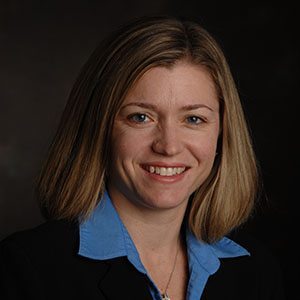
Kendall L. Kerew, Clinical Professor Associate Dean for Experiential Education; Clinical Professor of Law and Director of the Externship Program Administration/Leadership, Externship Program, Georgia State University College of Law
Kendall Kerew is a Clinical Professor and Director of the Externship Program at Georgia State University College of Law. She teaches Contracts, Elder Law, and the Externship Seminar. She is the recipient of GSU Law’s Patricia T. Morgan Award for Excellence in Scholarship (2023), Steven J. Kaminshine Award for Excellence in Service (2019), David J. Maleski Award for Teaching Excellence (2017), and the Black Law Student Association’s Bernadette Hartsfield Faculty Award (2024 and 2016).
Kerew’s scholarship focuses on topics related to professional identity formation and externship pedagogy. Kerew is a Fellow of the Holloran Center at the University of St. Thomas School of Law, Chair-Elect of the AALS Aging and the Law Section, and on the Executive Committee of the AALS Balance and Well-being in Legal Education Section. She is an active member of the AALS Clinical Legal Education Section’s Externships and Teaching Methodologies Committees and CLEA’s Advocacy and Externships Committees.
Prior to joining the faculty in 2005, Kerew worked as an associate at King & Spalding and as an assistant attorney general for the Georgia Attorney General’s Office.
Mary-Beth Moylan, Associate Professor of Law, University of the Pacific McGeorge School of Law
Mary-Beth Moylan is an Associate Professor of Law at McGeorge School of Law. She was a founder of the Global Lawyering Skills (“GLS”) program at McGeorge. GLS is a nationally recognized, required two-year skills program that introduces students to a broad range of core lawyering skills that include, legal research, writing, and oral advocacy, as well as client interviewing, client counseling, negotiation, and drafting. Professor Moylan is also the co-author of Global Lawyering Skills (West 2013) and Global Lawyering Skills: Second Edition (West 2018), a legal skills textbook that is unique in the market for its focus on cross-border and cross-cultural considerations in lawyering skills and practice. In addition to her experiences in the GLS program, Professor Moylan has been engaged with McGeorge’s Clinics, Externships, and Pro Bono work. She also has been involved with the Advocacy and Dispute Resolution Center and the Capital Center for Law and Policy. In addition to these areas of interest, she teaches Civil Procedure. Moylan served as the Associate Dean for Academic Affairs and Experiential Learning from 2019-2024.
Professor Moylan has a long-standing passion for and expertise in politics and government. Since 2003, she has supervised the publication of the California Initiative Review, an online journal providing objective and neutral analysis of each statewide ballot proposition. The California Initiative Review is published in advance of every California statewide general election. Professor Moylan and her students also hold a public forum for explanation and discussion of the statewide ballot propositions, and Professor Moylan regularly provides a summary of the propositions to Capital Public Radio’s Insight program in advance of each general election. Her expertise in politics and government is not limited to the initiative process, and Professor Moylan is often looked to by local news media for expert advice on state constitutional issues, conflicts of interest, and other election related topics. She was chairperson of the inaugural Sacramento Ethics Commission in 2018.
Professor Moylan is also an expert in legal skills education. She was President of the highly respected and influential Association of Legal Writing Directors (ALWD) in 2014-2015, and she regularly presents at conferences. In May 2018, she was a panelist for ALWD’s first Leadership Academy and she presented at the ALWD conference in Boston, Massachusetts. In 2016, she presented on a mediation panel at the Global Legal Skills Conference in Verona, Italy, and the Legal Writing Institute Conference in Portland, Oregon. During her tenure as GLS director, McGeorge has hosted the ALWD Conference (2011) and the Western Regional Legal Writing Conference (2016). She continues to serve on ALWD’s ABA Task Force, and as an advisor to its ALWD Guide Committee.
Although Professor Moylan was raised in New England, and attended college and law school in the Midwest, she launched her legal career in Sacramento as a law clerk for the Honorable Lawrence K. Karlton of the United States District Court for the Eastern District of California. She then practiced election law with Olson, Hagel, & Fishburn, and general civil litigation with Downey Brand LLP, both highly regarded Sacramento-based law firms. She maintains her connections to the Sacramento legal community and keeps abreast on changes to legal practice through her involvement with the Anthony M. Kennedy American Inn of Court. The Kennedy Inn brings together judges, lawyers, and law students to promote ethics, civility, and professionalism in the practice of law. Professor Moylan is a member of the executive committee of the Kennedy Inn, and she ensures that student members of the Inn are active participants in this organization.
Russell Pearce, Professor of Law; Edward and Marilyn Bellet Chair in Legal Ethics, Morality, and Religion, Fordham University School of Law
In 1990, Professor Pearce joined the Fordham faculty, where he teaches, writes and lectures in the field of professional responsibility. Professor Pearce has delivered the Baker & McKenzie Lecture on Legal Ethics at Loyola Chicago Law School, the inaugural Louis D. Brandeis Lecture at Pepperdine Law School and the inaugural William D. Brahms Lecture on Law and Religion at Case Western Reserve Law School. He has also received the Sanford D. Levy Memorial Award from the New York State Bar Association “in recognition of his contribution to understanding and advancement in the field of professional ethics.”
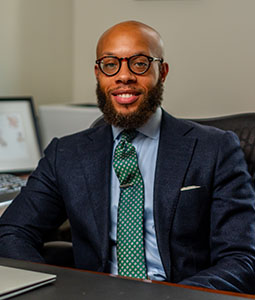
Etienne C. Toussaint, Associate Professor of Law, University of South Carolina Joseph F. Rice School of Law
Etienne C. Toussaint is a private law scholar who studies the historical development of poverty, food insecurity, and environmental injustice in the U.S. political economy. Drawing on critical legal theory, his scholarship examines the relationship among race, culture, and modern social movements as they confront private law’s ordering of the U.S. economy. He teaches Contracts, Business Associations, Law and Political Economy, and Critical Legal History.
Toussaint’s scholarship has been published or is forthcoming in leading scholarly journals, including the Columbia Law Review, California Law Review, Georgetown Law Journal, Boston University Law Review, Harvard Environmental Law Review, and Columbia Human Rights Law Review, among others. His shorter essays have been published or are forthcoming in leading online law journals, including the Virginia Law Review Online, UCLA Law Review Discourse, and Columbia Law Review Forum. His scholarship has been competitively selected for presentations at conferences and workshops across the country, including the Harvard/Stanford/Yale Junior Faculty Forum, the Georgetown University Law Center’s Law & Humanities Interdisciplinary Workshop, and The University of Pennsylvania Carey Law School’s Junior Faculty Business & Financial Law Workshop.
Professor Toussaint has been nationally recognized for his teaching, scholarship, and service. In 2024, he was awarded the National Bar Association’s 40 Under 40 Award. In 2023, he was elected as a fellow of the American Bar Foundation and received both a Faculty Scholarship Award and a Faculty Diversity Leadership Award from the University of South Carolina Joseph F. Rice School of Law. In 2022, he received the Junior Great Teacher Award from the Society of American Law Teachers (SALT). In 2021, he was honored as the Stegner Center Young Scholar by the Wallace Stegner Center for Land, Resources & the Environment at The University of Utah, S.J. Quinney College of Law.
Professor Toussaint joined the University of South Carolina from the University of the District of Columbia, David A. Clarke School of Law, where he was awarded the 2018 Outstanding Neophyte Law Professor Award. At UDC Law, he taught Contracts, Business Organizations, Law and Literature, and co-directed the UDC Community Development Law Clinic, representing dozens of small businesses, nonprofit organizations, and cooperative housing associations across the nation’s capital. Professor Toussaint began his legal career as a project finance associate with the international law firm Norton Rose Fulbright US LLP. Subsequently, he served as a Law & Policy Fellow with the Poverty & Race Research Action Council in Washington, D.C., focusing on fair housing law and policy. Toussaint began his law teaching career as a Friedman Fellow at The George Washington University Law School, where he earned an LL.M. in Advocacy under the mentorship of the late Professor Susan R. Jones.
Professor Toussaint earned his B.S. in Mechanical Engineering from MIT, where he was designated a Ronald McNair Scholar and Alpha Phi Alpha Distinguished Collegiate. He earned an M.S.E. in Environmental Engineering from The Johns Hopkins University, where he served as Graduate Student Adviser for Engineers Without Borders and led international development projects in South Africa. Toussaint earned his J.D. from Harvard Law School, where he served as a student-attorney in the Transactional Law Clinic, the Ghana Human Rights Clinic, and the Harvard Defenders. At HLS, he also served as an editor of the Harvard Environmental Law Review, Vice-President of the Board of Student Advisers, and a National Executive Board Member of the National Black Law Students Association as the National Director of the Nelson Mandela International Negotiations Competition.
Professor Toussaint has served as a Board Member of the Washington Council of Lawyers, a National Advisory Board Member of the National Black Law Students Association, and a member of the American Bar Association Commission on Homelessness and Poverty. Toussaint currently serves on the Advisory Board of the Georgetown Journal on Poverty Law & Policy. He also sits on the Executive Board of the AALS Professional Responsibility Section, Business Associations Section, and Minority Section (as Chair).
Born and raised in the South Bronx, Professor Toussaint is the proud husband of Dr. Ebony A. Toussaint, Ph.D., and the father of their three amazing sons.
