Friday, December 4, 1:00 – 2:00 PM ET/12:00 – 1:00 PM CT/11:00 AM – 12:00 PM MT/10:00 – 11:00 AM PT
For decades, the courts have interpreted the First Amendment’s Free-Speech Clause as expressing (in large part) a principle of neutrality. Accordingly, they have developed particular skepticism toward governmental retaliation against protected speech, and the government’s content-based regulation of speech more broadly. Yet content neutrality has come under great strain since the reelection of President Trump. The executive branch now regularly endeavors to punish critics and perceived political opponents, often for conduct that has long been regarded as protected speech. Are the courts standing firm on content neutrality in an era of political retaliation? Or are we drifting toward a reimagining of the Free-Speech Clause? If content neutrality is falling away, what might replace it as the animating principle behind free-speech law? Please join us for an interactive conversation about the crisis of content neutrality with two leading free-speech scholars, Robert Post and Jud Campbell.
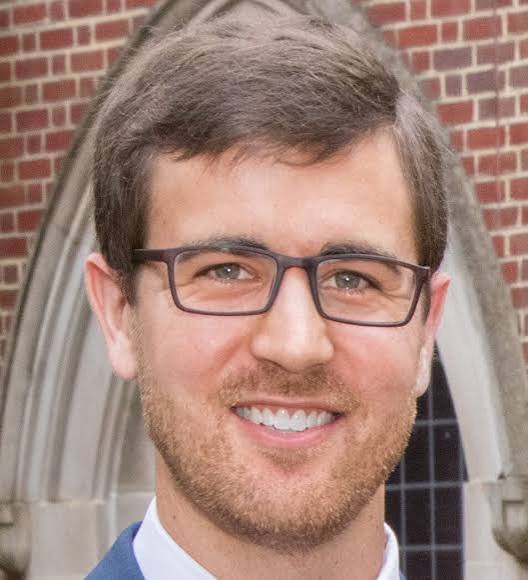
Jud Campbell, Jud Campbell, Professor of Law and Helen L. Crocker Faculty Scholar, Stanford Law School
Professor Jud Campbell is a legal historian whose scholarship explores American constitutional thought, with particular attention to the history of rights. His work explores older ways of thinking about natural law, natural rights, and general fundamental law, illuminating broad shifts in how Americans have understood constitutional law. Campbell’s publications include articles in the Harvard Law Review, Stanford Law Review, and Yale Law Journal. His 2017 Yale Law Journal article, “Natural Rights and the First Amendment,” has been widely recognized for reshaping scholarly understandings of free speech at the Founding.
Campbell was awarded the Federalist Society’s 2025 Joseph Story Award, which annually honors one early-career scholar for exceptional achievement in legal scholarship, teaching, and public engagement. He also received Stanford Law School’s 2025 Barbara Allen Babcock Award for Excellence in Teaching in the first-year curriculum.
Before joining the Stanford Law faculty in 2023, Campbell was a professor at the University of Richmond School of Law. He has also been a visiting professor at Harvard Law School, New York University School of Law, and the University of Chicago Law School. Earlier in his career, he served as Executive Director of the Stanford Constitutional Law Center.
He earned his J.D. from Stanford Law School and subsequently clerked for Judge Diane S. Sykes of the U.S. Court of Appeals for the Seventh Circuit and for Judge José A. Cabranes of the U.S. Court of Appeals for the Second Circuit. He holds a B.A. from the University of North Carolina at Chapel Hill and two master’s degrees from the London School of Economics, where he studied as a Marshall Scholar.
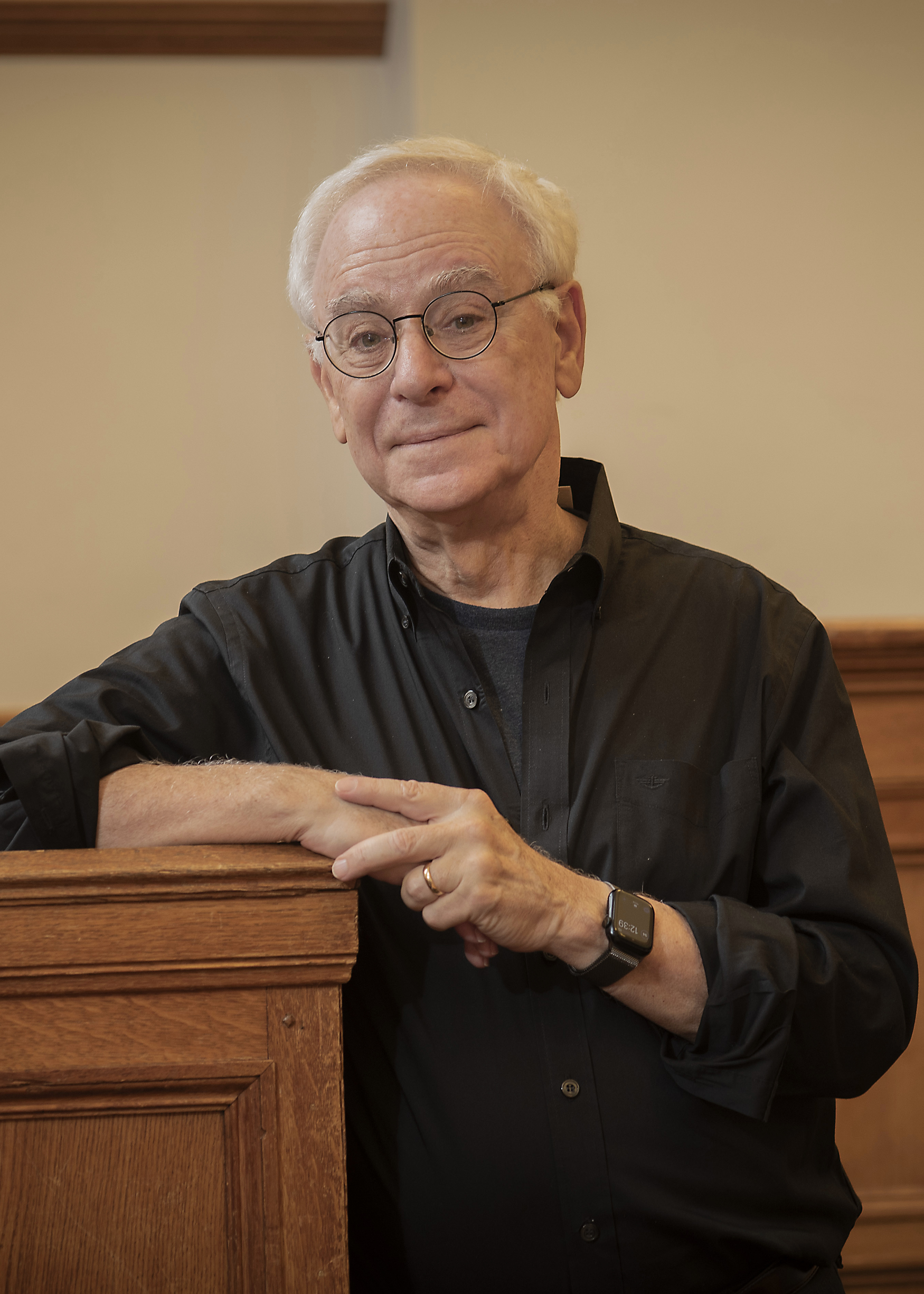
Robert C. Post, Sterling Professor of Law, Yale Law School
Robert Post is Sterling Professor of Law at Yale Law School. He served as the School’s 16th dean from 2009 until 2017. Before coming to Yale, he taught at the University of California at Berkeley School of Law.
Post specializes in constitutional law, with a particular emphasis on the First Amendment. Post has written and edited numerous books, including The Taft Court: Making Law for a Divided Nation, 1921-1930 (1924), which is Volume 10 of the Oliver Wendell Holmes Devise History of the Supreme Court of the United States; Citizens Divided: A Constitutional Theory of Campaign Finance Reform (2014), which was originally delivered as the Tanner Lectures at Harvard in 2013; Democracy, Expertise, Academic Freedom: A First Amendment Jurisprudence for the Modern State (2012), which was originally delivered as the Rosenthal Lectures at Northwestern University; For the Common Good: Principles of American Academic Freedom (with Matthew M. Finkin, 2009), which has become a standard reference for the meaning of academic freedom in the United States; and Prejudicial Appearances: The Logic of American Antidiscrimination Law (2001), which was original delivered as the Brennan Lectures at Berkeley.
Post publishes regularly in legal journals and other publications; exemplary articles and chapters include “Data Privacy and Dignitary Privacy: Google Spain, The Right to be Forgotten, and the Construction of the Public Sphere” (Duke Law Journal, 2018); “The Politics of Religion: Democracy and the Conscience Wars,” in The Conscience Wars: Rethinking the Balance Between Religion, Identity, and Equality (Susanna Mancini and Michel Rosenfeld, eds., Cambridge University Press 2018); “Theorizing Disagreement: Reconceiving the Relationship Between Law and Politics” (California Law Review, 2010); “Roe Rage: Democratic Constitutionalism and Backlash” (with Reva Siegel, Harvard Civil-Rights Civil-Liberties Law Review, 2007); “Foreword: Fashioning the Legal Constitution: Culture, Courts, and Law” (Harvard Law Review, 2003); and “Subsidized Speech” (Yale Law Journal, 1996).
Post is a member of the American Law Institute and a fellow of both the American Philosophical Society and the American Academy of Arts and Sciences.
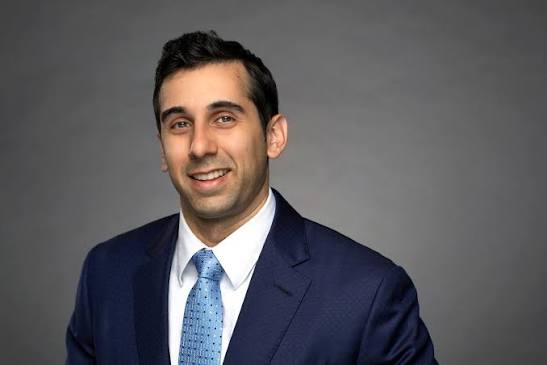
G. Alex Sinha, Professor of Law, Associate Dean for Faculty Research and Development, and Gregory Scholar at Maurice A. Deane School of Law at Hofstra University
Sinha’s research focuses on freedom of expression, race and inequality, legal and ethical theory, and national security law. He writes frequently the First Amendment, especially free speech, with a focus on content and viewpoint neutrality, the government-speech doctrine, and governmental propaganda and gaslighting. His latest work on viewpoint discrimination by police has been republished in the Thomson Reuters First Amendment Law Handbook. His recent articles and essays have appeared in journals such as the Harvard Civil Rights-Civil Liberties Law Review, Utah Law Review, Cardozo Law Review, UCLA Law Review Discourse, and California Law Review Online.
Sinha’s research has been featured in venues such as The New York Times, The Washington Post, The Wall Street Journal, and legislative debates in the U.S. Senate. He has appeared on programs such as Democracy Now! and BBC World News Live.
Sinha earned a J.D. from the NYU School of Law, where he was an Institute for International Law and Justice Scholar. He also earned a Ph.D. in Philosophy from the University of Toronto, where he specialized in normative ethical theory and philosophy of law.
